
Section 04
Surgery
One operation was standard for roughly eighty years because of a theory about how the disease travels. This section follows that operation, the smaller ones that replaced it, and the long argument about the axilla.
4 entries · A century of one operation, and how it ended.
Entries in this section
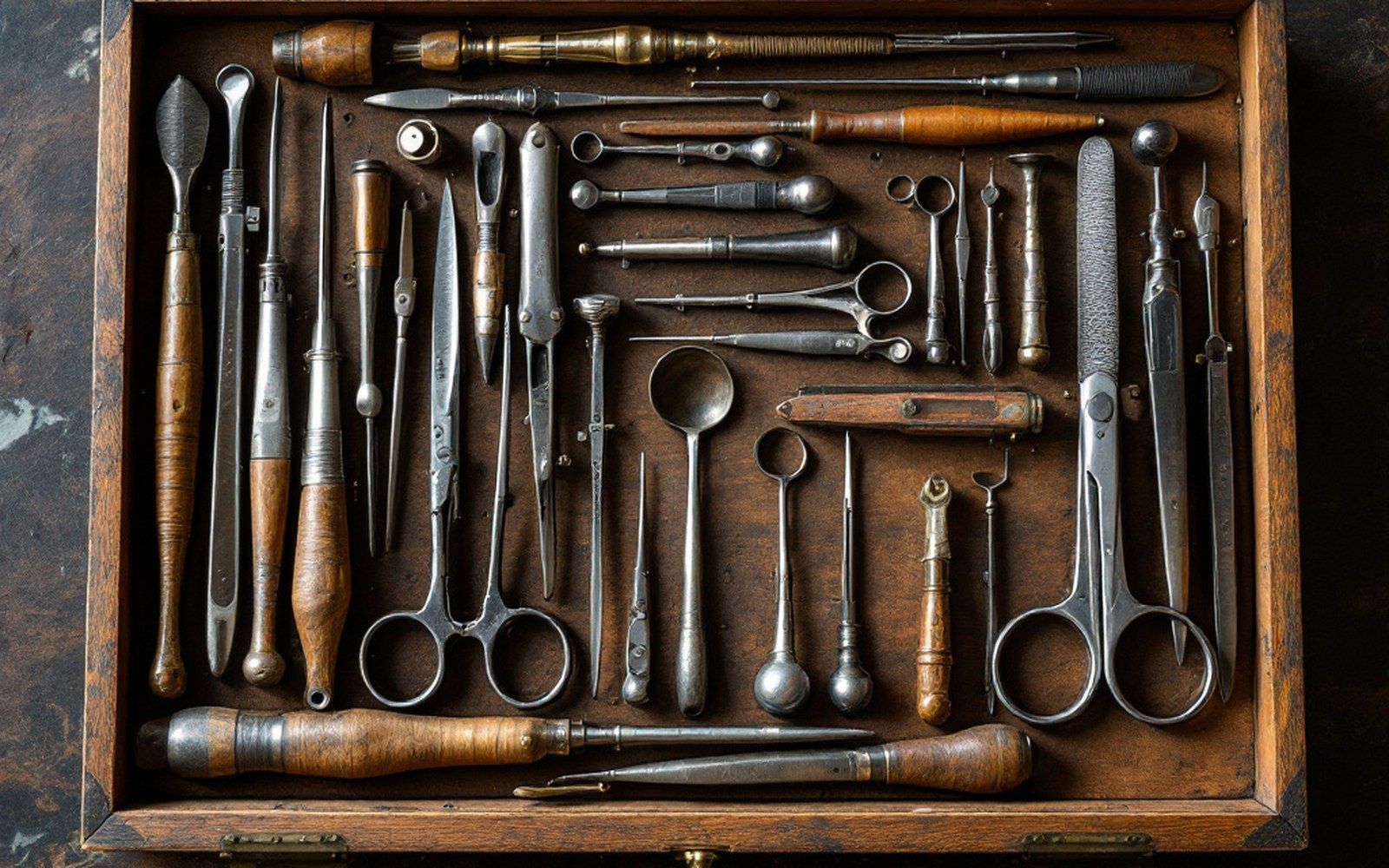 04.1 The radical mastectomy
William Halsted formalised the operation in the 1890s and it remained standard for roughly eighty years.
- 04.2 Halsted's theory of spread
The operation followed from a theory about how the disease travelled, and when the theory turned out to be wrong the operation went with it.
 04.3 Conserving surgery
Removing less tissue was resisted for a long time and then shown to give the same result, which took trials rather than argument.
 04.4 The axilla
How much of the armpit to remove was its own long argument, with real consequences for the arm afterwards.
Every entry on this site is one thing that was established, and who established it. The complete set is in the register.