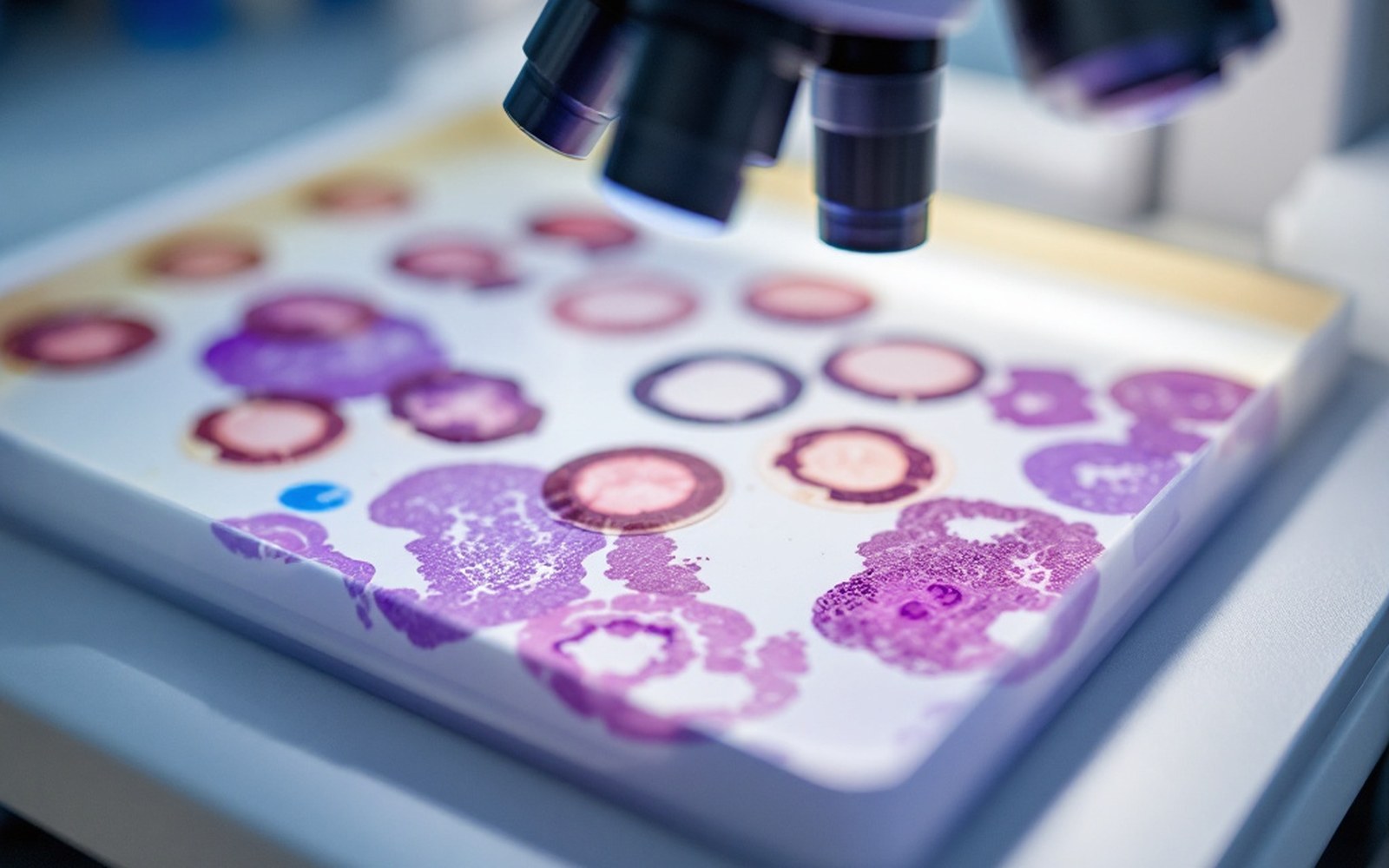
A microscope slide tray of stained tissue sections on a laboratory bench under even light

Surgery · the entry to read first

A century of surgery, overturned by arithmetic

William Halsted's radical mastectomy rested on a claim about how the disease travels through the body. Bernard Fisher and the NSABP tested that claim instead of arguing with it.

Stained sections on glassEvery route on this site ends at a slide like one of these: imaging locates, the section decides.
Three threads run through this subject and they moved at different speeds: what the disease is, how it is found, and what is done about it. The third one changed because somebody counted.

What was established, and who established it

Seven of twenty-eight · all in the register

1894

The radical mastectomy is set out as a standard operation

Established by
William Halsted, Johns Hopkins Hospital
Source
Annals of Surgery, 1894

1948

A less extensive operation, sparing the pectoral muscle, is described

Established by
David Patey, Middlesex Hospital, London
Source
British Journal of Cancer, 1948

1960

Mammographic technique is specified closely enough to be reproduced elsewhere

Established by
Robert Egan, MD Anderson Hospital, Houston
Source
Radiology, 1960

1962

A receptor that binds oestrogen is identified in target tissue

Established by
Elwood Jensen and Herbert Jacobson, University of Chicago
Source
Biological Activities of Steroids, 1962

1976

Mastectomy is randomised against lumpectomy with irradiation

Established by
Bernard Fisher and the NSABP, University of Pittsburgh
Source
NEJM 1985; twenty-year follow-up 2002

1988

Pooled patient-level data from every eligible trial quantify what adjuvant treatment does

Established by
Richard Peto and the Early Breast Cancer Trialists' Collaborative Group, Oxford
Source
The Lancet, 1988

1990

A susceptibility gene, BRCA1, is localised to chromosome 17q21

Established by
Jeff Hall, Mary-Claire King and colleagues, Berkeley
Source
Hall et al., Science, 1990

Pick a year · every entry names what was established and who established it

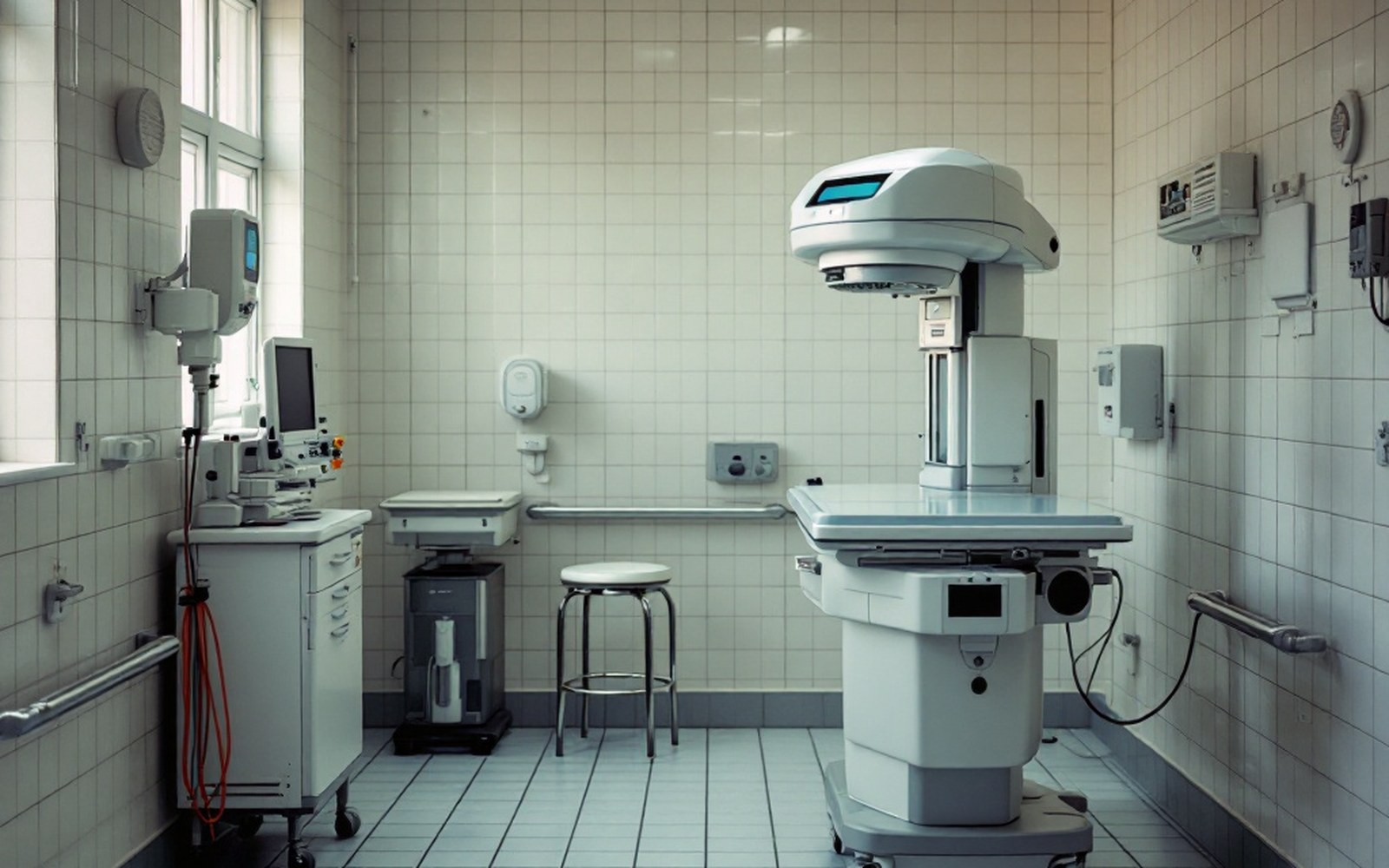
Early mammography machine in an empty tiled examination room
A dedicated unitPutting tube, compression plate and film in one machine separated the examination from general radiography.

Illustrative photograph

Dedicated equipment separated the examination from general radiography, but the picture only became reliable when the technique was written down. Mammographic technique

A row of films clipped to a backlit viewing box in a darkened reading room
Reading is comparativeThe same breast against its own earlier films, and against the other side.

Film gave way to detectors, and the comparison was itself put to a trial. Film to digital

Fisher's argument was that the radical operation removed more tissue on the strength of a theory nobody had tested, and that the way to settle it was to allocate patients at random and count.

On the design of NSABP B-04, opened in 1971 by the National Surgical Adjuvant Breast and Bowel Project.

Where the evidence is genuinely contested

Population screening

One argument on this site is unsettled. Both positions are set out with the body that holds each, and this site does not choose between them.

The position that benefit is established

The IARC Handbooks working group concluded in 2015 that there is sufficient evidence that mammographic screening reduces breast cancer mortality in women aged 50 to 69.

IARC Handbooks of Cancer Prevention, Volume 15, 2015

The position that the harm is understated

The independent UK panel chaired by Michael Marmot estimated that for every 10,000 women invited from age 50 for twenty years, about 43 breast cancer deaths are prevented and about 129 cancers are overdiagnosed. A Cochrane review by Peter Gøtzsche and Karsten Jørgensen read the same trials less favourably again.

The Lancet, 2012 · Cochrane Database of Systematic Reviews, 2013

01

The disease

The tissue, and how it is classified. 5 entries.

03

Detection

How it is looked for, and the argument about that. 5 entries.

04

Surgery

A century of one operation, and how it ended. 4 entries.

05

The trials

Randomisation as evidence. 5 entries.

06

Treatment

What the treatments are and where they came from. 5 entries.